Table of Contents
Traveling and Camping Across the USA: Family-Friendly Comparison — RV vs Tent Camping
RV vs Tent Camping Exploring the United States with the family is an unforgettable way to build memories. But deciding whether to travel and camp in a camper/RV or go “on the land” with a tent can shape your whole trip. This long-form guide compares both styles with practical tips, packing lists, safety notes, cost considerations, family-friendly activities, and two sample 7-day itineraries — one designed for an RV family trip and one for a tent camping family trip. Use this to choose the best fit for your family or to mix both styles on different legs of a longer adventure.
Quick overview: RV camping vs. Tent camping
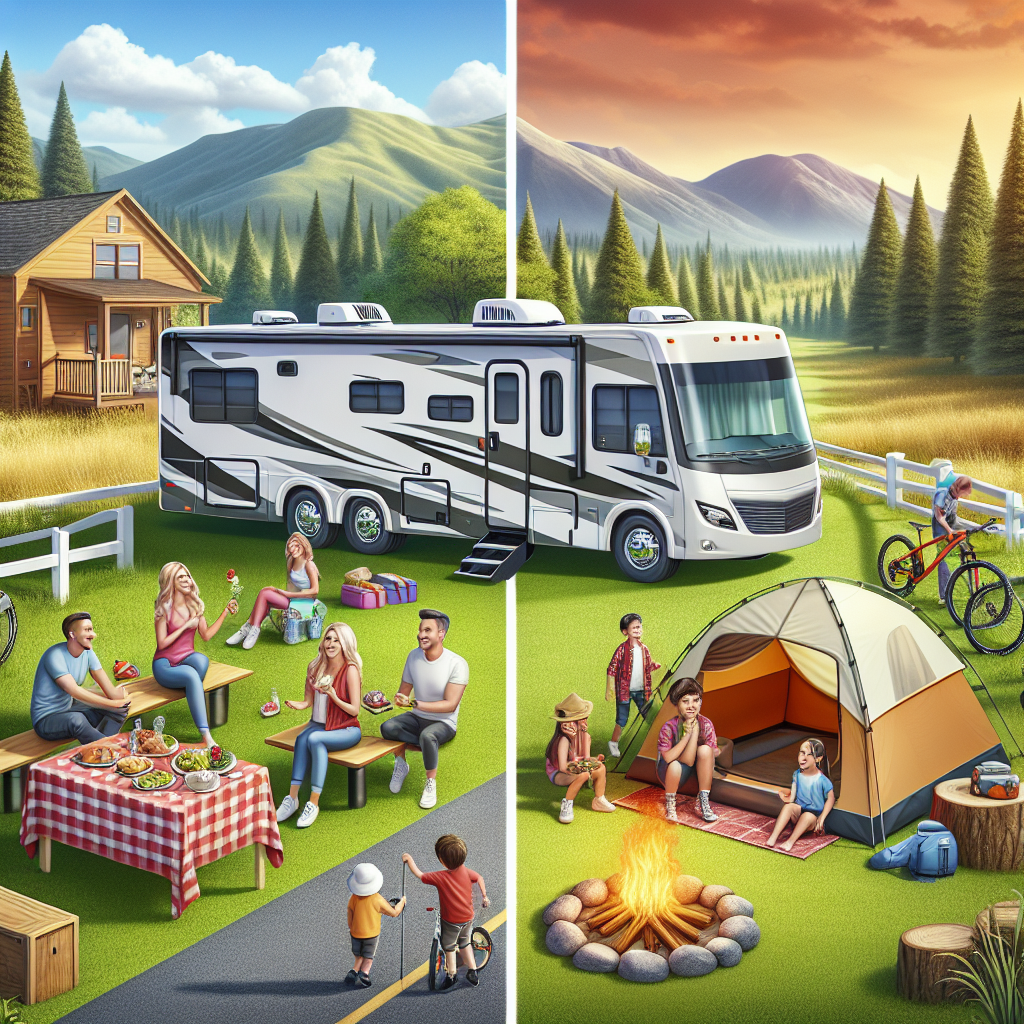
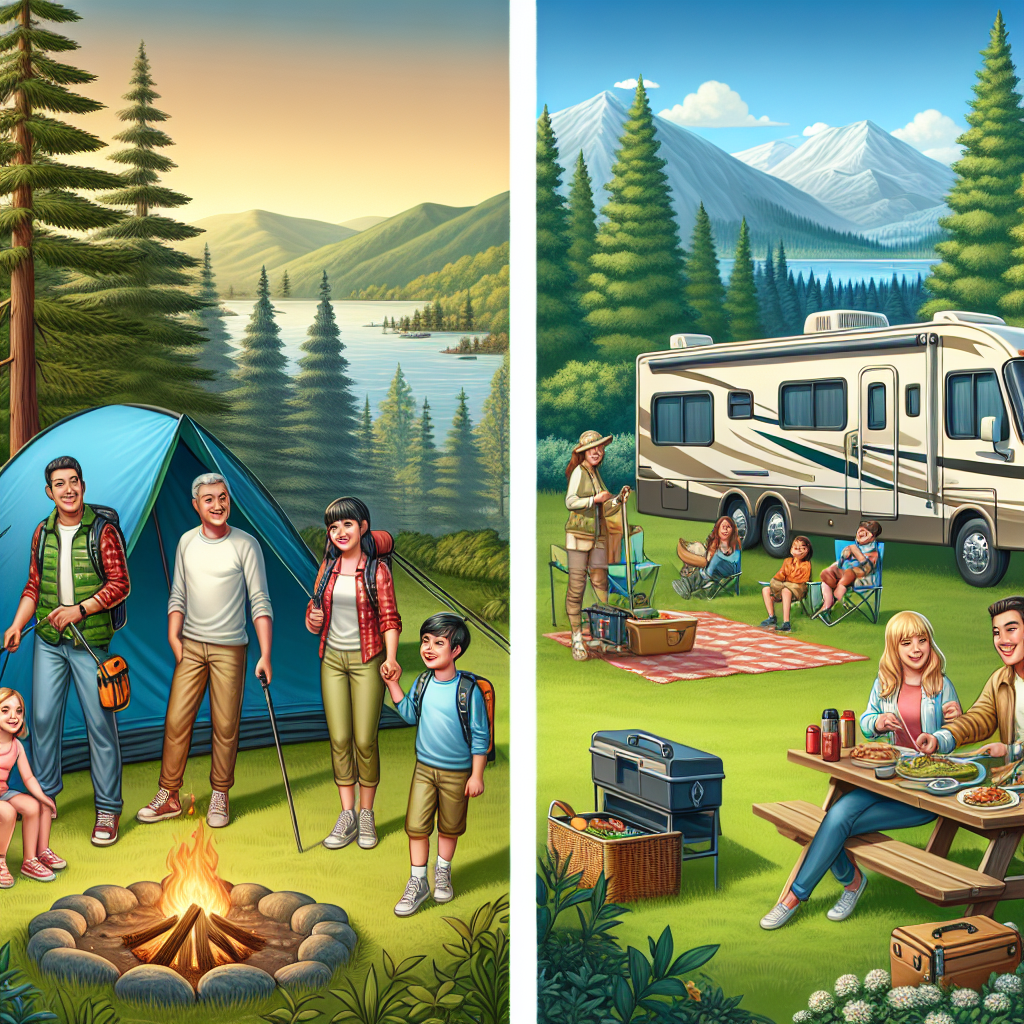
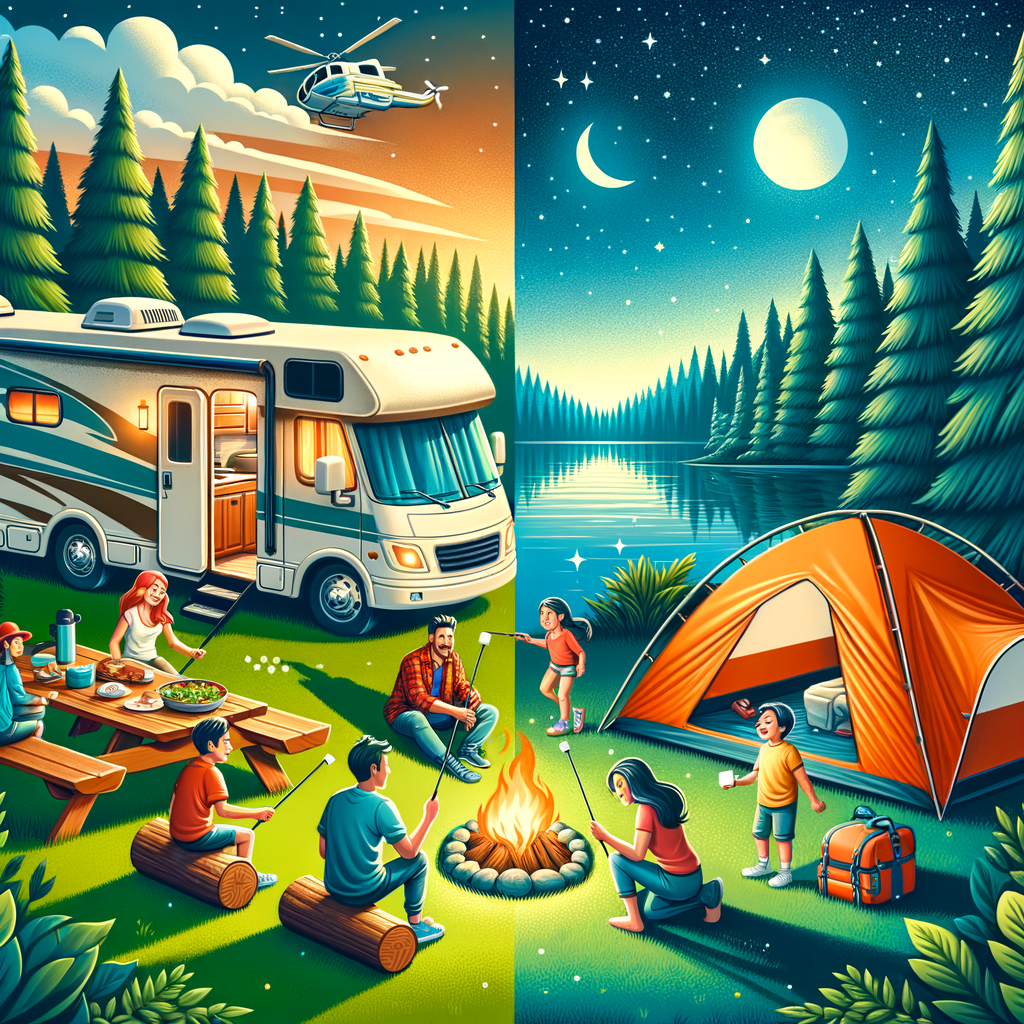
- RV (camper van, motorhome, travel trailer): Built-in bed(s), kitchen, sometimes a bathroom and heating/air conditioning. Great for families who want comfort, flexibility, and the ability to move long distances while carrying more gear.
- Tent camping (car camping, backpacking, dispersed/backcountry): A tent provides a closer-to-nature experience. Favors families who enjoy active outdoor experiences, lower cost of entry, and the simple joy of sleeping under the stars.
When deciding RV vs Tent Camping Both approaches can be family-friendly, safe, and fun. The best choice depends on your family’s comfort needs, ages, budget, and the type of experiences you want.
RV vs Tent Camping Comfort and convenience
RV: Home on wheels
- Indoor sleeping and lounging space protects kids from weather, bugs, and wildlife.
- Kitchen and refrigerator make meal prep and food storage easy.
- Onboard bathroom/toilet simplifies late-night needs and reduces trips to campground facilities.
- Climate control helps with heat and cold — important with infants and young kids.
- More storage for toys, clothes, bikes, and activity gear.
Example: A family with small children can use the RV to keep nap schedules consistent and have snacks and water at hand during long travel days.
Tent: Closer to nature
- Tents put your family right in the outdoors — the sound of wind and wildlife, easy access to hiking and campfires.
- Simpler setup and teardown (for car camping). Backpacking tents require more skill and staying lighter.
- Teaches kids outdoor skills: pitching a tent, building a safe campfire, and reading a map.
- Many campgrounds offer clean restrooms; some have showers. Primitive sites require more planning.
Example: Older children who want hands-on nature experiences may prefer tent camping — they can help set up camp and explore nearby trails.
RV vs Tent Camping Cost comparison
Upfront and rental costs
- RV: Buying an RV is a big investment ($20,000 to $300,000+ depending on type). Renting is popular — average rates vary widely ($80–$250+ per night) depending on season and size.
- Tent: Initial gear costs are lower: tent ($100–$600), sleeping bags, pads, camp stove, cooler, and other basic camping gear. No vehicle modification required.
Ongoing costs
- RV:
- Fuel: RVs are heavy — expect lower fuel efficiency (6–12 mpg depending on size).
- Campground fees: Full hookups $40–$100+ per night. State and national park campgrounds $20–$50.
- Maintenance, dump station fees, insurance, and generator fuel if used.
- Tent:
- Fuel: Only vehicle fuel for the tow/drive.
- Campground fees: Often $10–$40 per night for tent sites. Dispersed camping on BLM/National Forest land can be free or very low cost.
- Fewer maintenance costs for gear (replace as needed).
Budget example (family of four, 7-day trip)
- RV rental model: $150/night rental = $1,050 + fuel $400 + campground fees $300 + food $250 = ~$2,000
- Tent (car camping) model: gear amortized $400 + campground fees $140 + fuel $200 + food $250 = ~$1,000
Costs vary by route, season, and whether you own gear or the RV.
RV vs Tent Camping Safety and health
RV-specific safety
- Carbon monoxide and propane safety: Ensure detectors and proper ventilation.
- Driving safety: RV driving requires practice; allow for longer braking distances and wider turns.
- Generator noise and fumes: Use only in ventilated, permitted areas.
- Kids: Secure loose items while driving; use seat belts per local law (some RVs have limited belted seats).
Tent-specific safety
- Weather exposure: Tents protect less from heavy rain, wind, extreme cold. Bring appropriate shelter and sleeping gear.
- Wildlife: Bears, raccoons, and other animals are attracted to food. Use bear boxes and follow campground rules.
- Hypothermia and insects: Good sleeping bags, layered clothing, and insect repellent are important.
- Backcountry risks: Navigation and first aid skills vital for remote tent camping.
General tips:
- Pack a well-stocked first aid kit and know basic first aid procedures.
- Keep emergency contacts and park information readily available.
- Check weather and road conditions before travel.
RV vs Tent Camping Accessibility and mobility
RV advantages
- Great for families with mobility concerns, small children, or elderly traveling companions.
- Easy to access bathrooms, drive to attractions, and carry mobility aids.
- Good for long-distance road trips when nightly relocation is expected.
Tent advantages
- Easier to access remote or rugged areas where RVs cannot go.
- Allows exploring narrow forest roads or trailheads requiring short hikes.
- Can be more flexible at backcountry sites — you can camp almost anywhere permitted.
RV vs Tent Camping Family-friendliness and activities
Both camping styles can be ideal for family bonding. Here’s how to maximize family fun in each.
RV activities for families
- Mobile movie night: mount a tablet or use onboard TV for rainy evenings.
- Cooking together in the camper kitchen; easy to make pancakes or camp chili.
- Day trips: park the RV and take short drives to scenic spots, nature centers, or visitor centers.
- Board games and card games in the evening.
Tent activities for families
- Nature scavenger hunts: Younger kids love finding leaves, rocks, or pinecones.
- Campfire cooking: Roast marshmallows, make foil packet dinners, and tell stories.
- Star-gazing: With less light pollution in many tent sites, kids can learn constellations.
- Trail hikes and pond/river exploration.
Activity example: At Acadia National Park, an RV family might park at a campground and drive the Loop Road to multiple viewpoints in a day. A tent family could pitch at a close-by site and take kids on short rocky beach walks and tidepool discoveries.
RV vs Tent Camping Environmental impact and Leave No Trace
- Tent camping and RV camping both carry environmental footprints. The key is responsible behavior.
- Leave No Trace principles apply: pack out trash, avoid damaging vegetation, camp at established sites when possible, use existing fire rings, and minimize noise.
- RVs consume more fuel and may generate more waste, but some RVers mitigate impact by using efficient routes, solar power, and responsible waste disposal.
- Tent campers often reduce impact by staying lightweight, using low-impact camp stoves (avoid large campfires where prohibited), and using biodegradable products.
Planning and logistics
Reservations and seasonality
- National Parks: Popular campgrounds fill months in advance — plan and book early whether RV or tent.
- State parks and private campgrounds: Many require reservations, especially holiday weekends.
- Dispersed and backcountry camping: Often free but may require permits (especially overnight backcountry permits).
Route planning
- RVs: Route for size clearance (bridges, low overpasses) and weight limits. Use RV-friendly GPS apps and check campground length limits.
- Tent campers: Consider trail lengths, water availability, and bathroom facilities. Pack water filtration for backcountry trips.
Daily pacing for families
- Keep driving days short (2–4 hours max) if traveling with small children.
- Build in downtime for naps, playgrounds, or relaxed afternoons at the campsite.
- Factor in time for setting up and breaking down camp.
Practical packing checklists
Below are concise checklists for a family of four (two adults, two children). Adjust for family size, age, and trip length.
RV family packing checklist
- Documents: registration, insurance, driver’s license, campground reservations, route info.
- Safety: carbon monoxide detector, fire extinguisher, first aid kit, flashlight/headlamps.
- Bedding: sheets, sleeping bags (optional), blankets, pillows.
- Kitchen: plates, utensils, pots/pans, coffee maker/kettle, trash bags, dish soap, sponge, cooler.
- Food: easy family meals, snacks, drinks, baby food/formula if needed.
- Clothing: layers for variable weather, rain gear, hats, swimwear, hiking shoes.
- Outdoor gear: folding chairs, kids’ toys, bikes or scooters, fishing gear.
- Maintenance: spare tire, tool kit, jumper cables, leveling blocks, sewer hose and fittings.
- Entertainment: books, games, tablets, chargers.
- Hygiene: toiletries, diapers/wipes, towels, toilet paper.
- Misc: sunscreen, insect repellent, camera, maps, cash for small fees.
Tent family packing checklist (car camping)
- Shelter: tent (with footprint), stakes, mallet, tarp, extra guy lines.
- Sleeping: sleeping bags rated for expected temps, sleeping pads, pillows.
- Cooking: camp stove, fuel, lighter/matches, cookware, utensils, cooler.
- Food & water: meal plan, water containers, water filter/purification tablets.
- Clothing: wool/synthetic layers, rain jackets, sturdy shoes, sun hats.
- Safety: first aid kit, bear spray where appropriate, flashlight/headlamps, map and compass/GPS.
- Camp comforts: camp chairs, lantern, camp table (optional), games, binoculars.
- Hygiene: biodegradable soap, toothbrushes, towels, toilet paper, trowel for cathole if dispersed camping.
- Misc: insect repellent, sunscreen, rope, trash bags, waterproof storage for electronics.
Sample 7-day family itineraries
Below are two parallel 7-day itinerary examples — one RV-focused and one tent-focused — both family-friendly and designed to show what a week might look like in different settings.
7-day RV family trip — Pacific Coast (San Francisco to Big Sur and the Monterey Peninsula)
Day 1: Pick up RV near San Francisco; short drive to Half Moon Bay. Settle in, beach walk, campfire (if allowed).
Day 2: Drive to Santa Cruz — boardwalk visit, play on the beach, overnight at RV park with hookups.
Day 3: Scenic drive to Monterey; visit Monterey Bay Aquarium (kid favorite). Overnight full-hookup RV campground.
Day 4: Drive the 17-Mile Drive and stop in Carmel-by-the-Sea. Afternoon beach time; civic playgrounds for kids.
Day 5: Head to Big Sur; explore Pfeiffer Big Sur State Park, short family-friendly waterfalls and redwood walks. Boondocking or state park with limited amenities — check RV length limits.
Day 6: Relax day — tidepooling at Garrapata Beach or a mellow hike. Campfire storytelling and camp-cooked dinner.
Day 7: Drive back north to San Simeon for an elephant seal viewing (if in season), then return RV and conclude trip.
Why this is family-friendly: Short drives, frequent stops, easy access to attractions, comfort for naps and unpredictable weather.
7-day tent family trip — Great Smoky Mountains National Park (Car camping + day hikes)
Day 1: Arrive at campground (reserve site). Set up tent, explore campground nature trail, marshmallow roast.
Day 2: Visit Sugarlands Visitor Center for kid programs; hike a short trail (Laurel Falls — family-friendly).
Day 3: Drive the Newfound Gap Road; stop at overlooks. Short hike to a waterfall or picnic.
Day 4: Day in Cades Cove: rent bikes (or drive loop), wildlife viewing, history stops. Return to tent, evening star-gazing.
Day 5: Moderate family hike (e.g., Abrams Falls) with a picnic lunch; beach-free creek play.
Day 6: Ranger-led kid program in the morning; relax in the afternoon and let kids play near the campground stream.
Day 7: Pack up early; visit a nearby small-town farmers market on the way home.
Why this is family-friendly: Short hikes, plentiful ranger programs, streams for kids to play, and lots of wildlife-viewing opportunities. Tent camping keeps you close to trails and nature experiences.
Tips and tricks for a smoother family trip
- Test gear at home: Set up tents in the backyard, practice driving and parking the RV in a large empty lot.
- Keep a flexible itinerary: Kids get tired; plan “rest days” and rescue activities like easy playgrounds.
- Snack strategy: Pack a variety of accessible, healthy snacks and special treats for long drives or hikes.
- Safety routines: Teach kids simple guidelines — stay within sight, never touch wildlife, and what to do if separated.
- Meal planning: Pre-cook and freeze some meals for tent trips; use one-pot dinners in both setups to reduce cleanup.
- Technology balance: Use devices for navigation and entertainment but set times for “screen-free” nature activities.
- Weather planning: Check extended forecasts and be prepared for quick changes, especially in mountains and deserts.
Which is better for your family?
Consider the following to pick the right approach:
- Comfort vs. immersion: Choose RV for comfort and convenience; choose tent for immersion and active outdoor learning.
- Budget: Choose tent camping if you want a lower-cost trip; RV has higher ongoing costs but can be economical if you already own one and avoid flights.
- Age and mobility: RVs are easier with babies, toddlers, and elderly family members. Tents are great for older children ready for hiking and hands-on participation.
- Destination: Some places are RV-friendly (coastal drives, many national and state park campgrounds) while others require tent/backcountry (remote hikes, some wilderness areas).
- Duration and distance: For long cross-country routes with many stops, an RV reduces packing/unpacking and motel stays. For local or regional adventures, tent camping may be simpler and more flexible.
Final considerations
- Combine both: You don’t have to choose forever. Try RV for one season and tent camping another. Many families enjoy RV travel to cover large distances and tent camping for deeper wilderness legs.
- Safety and education: Teach kids camping basics early — this builds confidence and makes future trips smoother.
- Respect the land: Follow local rules, pack out trash, and minimize noise. Model stewardship for the next generation.
Conclusion
Whether you choose an RV or a tent, family camping across the USA offers powerful opportunities for connection, learning, and adventure. RV travel brings comfort, storage, and ease for long distances and younger kids. Tent camping connects your family more closely to nature, encourages outdoor skills, and often costs less. The right choice depends on your family’s comfort, budget, destination, and desired experience. With thoughtful planning, safety preparation, and flexible pacing, both options create meaningful memories that last a lifetime. Pack well, plan ahead, and enjoy the journey.